President Donald Trump announced on Thursday, November 19, that he has posthumously pardoned Pete Rose, Major League Baseball’s all-time hits leader, for the federal tax crimes Rose pleaded guilty to in 1990. Trump announced the pardon in a post on Truth Social as he returned from a trip to Asia. Rose, who collected a record 4,256 hits in his career, died in 2024 at the age of 83. The pardon closes the criminal case against Rose, but his place in baseball history is decided elsewhere.
Key Takeaways
- President Trump announced a posthumous, “complete and total” pardon for Pete Rose on Thursday, November 19.
- The pardon covers Rose’s 1990 conviction on two counts of filing false tax returns.
- Rose’s permanent ban from baseball, agreed in 1989 over betting on games, was a separate decision by Major League Baseball, not a criminal case.
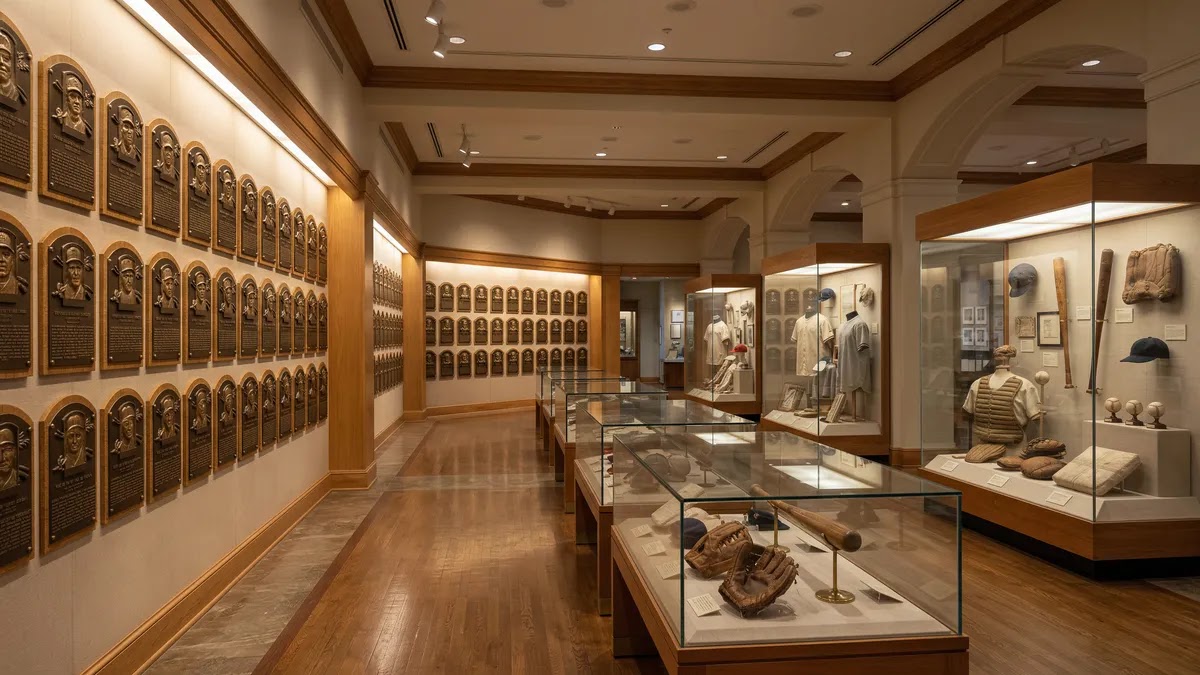
- His Hall of Fame eligibility was restored by MLB in May 2025, after his death; the next Hall vote on his case is in December 2027.
What Happened
Trump wrote on Truth Social that he had “just given a Complete and Total Pardon to the Late, Great Pete Rose, a true Baseball SUPERSTAR & LEGEND.” Earlier in November, Trump had said he would consider a pardon for Rose, Reuters reported.
The conviction dates back to April 20, 1990, when Rose pleaded guilty to two counts of filing false tax returns. He admitted that he failed to report $354,968 in income over a four-year period. According to Reuters, the unreported income included money from memorabilia signings and winnings from horse-racing wagers.
Rose was sentenced to five months in a minimum-security prison. He was also fined $50,000, ordered to complete 1,000 hours of community service, and repaid the Internal Revenue Service $366,042, the Associated Press reported.
Rose’s attorney Jeffrey Lenkov told Reuters the pardon was a benevolent gesture, while noting it would have meant more had it come while Rose was alive. The Hall of Fame did not respond to a request for comment, and an MLB spokesman declined to comment.
Why It Matters
The pardon deals only with Rose’s criminal record. His exclusion from baseball rested on a separate track. In August 1989, Rose agreed to a permanent ban from the sport after MLB investigator John M. Dowd concluded that he had bet on baseball, including on the Cincinnati Reds, the team he played for and managed between 1985 and 1987.
Under a rule the Hall of Fame adopted in 1991, anyone on MLB’s permanently ineligible list cannot be considered for election to the Hall. That rule, rather than the tax conviction, kept Rose out of Cooperstown during his lifetime.
The barrier moved in May 2025, when Commissioner Rob Manfred ruled that a person’s status on the ineligible list is restored at death. The decision removed Rose and 16 others, including Shoeless Joe Jackson, from the list. Manfred later acknowledged that Trump had pressed him to make the change.
What Happens Next
The Hall of Fame has said that anyone removed from MLB’s permanently ineligible list is eligible for Hall of Fame consideration. Rose’s case now goes before the Classic Baseball Era committee, which is next scheduled to vote in December 2027. The earliest he could be inducted is 2028.
Lenkov told Reuters that the appeal to voters would focus on Rose’s achievements on the field and the argument that he had paid his debt for both his baseball and legal offenses. Whether voters agree remains an open question: Lenkov himself described Rose as “very polarizing.”
Key Facts
- Rose collected 4,256 hits, the most in MLB history, over 24 seasons from 1963 to 1986, most of them with the Cincinnati Reds.
- He accepted a permanent ban from baseball in August 1989 after an investigation found he bet on games.
- He pleaded guilty to two tax counts in April 1990 and served five months in prison.
- He died in 2024 at age 83.
- MLB removed him from the permanently ineligible list in May 2025.
FAQ
What exactly did the pardon cover?
Rose’s federal tax conviction from 1990: two counts of filing false tax returns. Trump described the pardon as complete and total. It does not relate to any baseball penalty, because the ban was imposed by MLB, not by a court.
Does the pardon get Pete Rose into the Hall of Fame?
No. The pardon has no direct effect on the Hall. Rose became eligible for consideration in May 2025, when MLB removed him from its permanently ineligible list after his death. Election still requires a committee vote.
When could Rose be inducted?
The Classic Baseball Era committee next votes in December 2027, so the earliest possible induction would be in 2028.
Related: Nvidia China Chip Probe: California AG Subpoenas Chipmaker
Sources
- Reuters: reuters.com
- Reuters (Field Level Media): reuters.com
- Associated Press, via NBC Sports: nbcsports.com
- USA Today: usatoday.com