
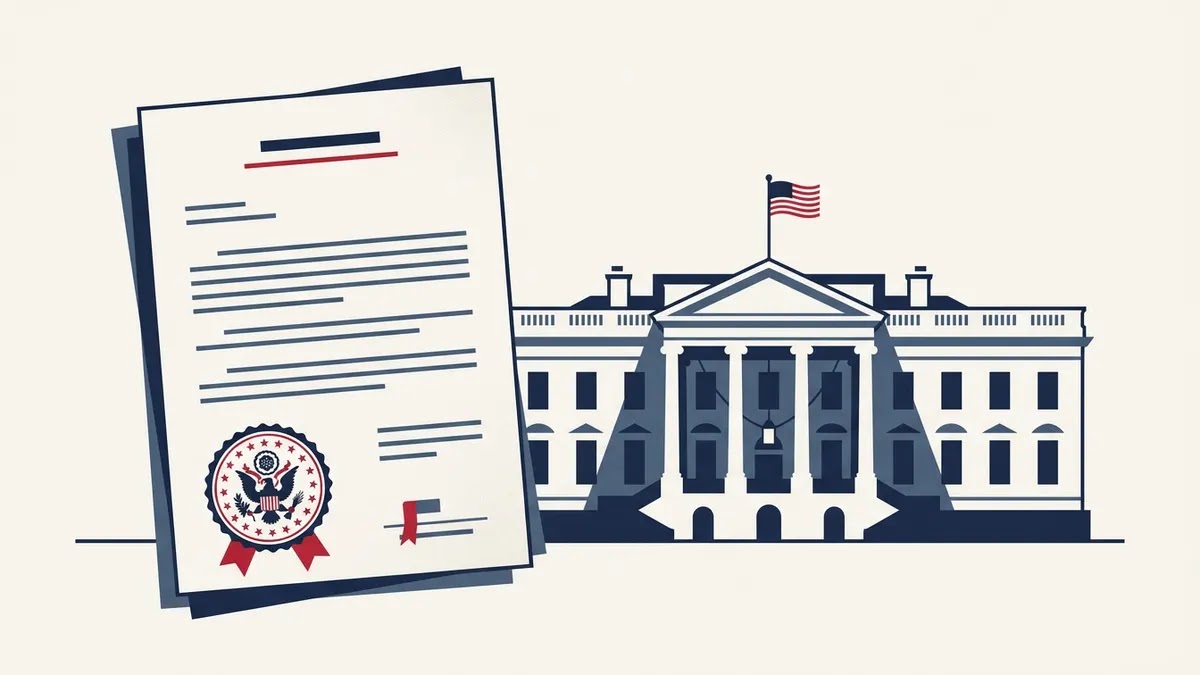
President Donald Trump signed an executive order late on Friday, 20 November, directing federal contractors and subcontractors to check with the White House before responding to congressional inquiries — and to withhold any communications the White House considers privileged. The order, formally titled “Protecting the Executive’s Privileges and Enhancing Efficiencies in Federal Contracting” and numbered Executive Order 14438, applies to tens of thousands of businesses that do work for the federal government. Contractors that fail to comply risk losing their contracts.
Key Takeaways
- Trump signed Executive Order 14438 late on Friday, 20 November 2026.
- Federal contractors and subcontractors must notify the White House before answering congressional inquiries.
- Communications the White House deems privileged must be withheld.
- Contractors that do not comply risk having their contracts terminated.
- Democrats, who take control of Congress in January, called the order unlawful. Rep. Jamie Raskin called it “unprecedented and blatantly unlawful.”
What Happened
The order requires every federal contractor — and every subcontractor working under one — to alert the White House before responding to a request from Congress. If the White House decides that the information involved is privileged, the contractor must hold it back rather than hand it over.
The White House published the order on 21 November. Its formal title, “Protecting the Executive’s Privileges and Enhancing Efficiencies in Federal Contracting,” signals how the administration frames the move: as a defence of executive privilege and a way to make federal contracting work more smoothly.
The rule reaches deep into the federal supply chain. It covers tens of thousands of businesses, from large defence and technology firms to small companies that supply goods and services to government agencies. The penalty for ignoring it is severe — a contractor that fails to follow the order risks termination of its contract.
Why It Matters
The order lands at a sensitive moment. Democrats take control of Congress in January, and congressional inquiries are one of the main tools lawmakers use to oversee the executive branch. By inserting the White House between Congress and the contractors who carry out federal work, the order limits what lawmakers can learn directly from the companies that do the government’s business.
Democrats were quick to object. Rep. Jamie Raskin called the order “unprecedented and blatantly unlawful,” and other Democrats described it as an attempt to shield the administration from scrutiny. The White House position, reflected in the order’s title, is that it protects executive privilege and improves efficiency in federal contracting.
The disagreement sets up a direct clash between the White House’s claim of privilege and Congress’s power of oversight — a question that has divided the two branches before, but rarely in a form that reaches so many private businesses at once.
What Happens Next
The order is now in effect, so contractors will have to build the White House notification step into the way they handle congressional requests. The real test will come in January, when Democrats take control of Congress and begin issuing inquiries.
Whether lawmakers accept the new process, push back against it, or challenge it in court will decide how much practical effect the order has — and whether the tens of thousands of businesses it covers change how they deal with Congress at all.
Key Facts
- Order: Executive Order 14438, signed late Friday, 20 November 2026.
- Who is covered: All federal contractors and subcontractors.
- What it requires: Notify the White House before responding to congressional inquiries; withhold communications the White House deems privileged.
- Penalty for non-compliance: Risk of contract termination.
- Reaction: Democrats called it unlawful; Rep. Jamie Raskin called it “unprecedented and blatantly unlawful.”
FAQ
What does the executive order require contractors to do?
It requires them to notify the White House before responding to congressional inquiries, and to withhold any communications the White House considers privileged.
What happens if a contractor does not comply?
The contractor risks having its federal contract terminated.
Why are Democrats objecting?
They say the order is unlawful and limits Congress’s ability to oversee the executive branch. Democrats take control of Congress in January.
Related Reading
Sources
- AP (via NPR Illinois), 21 November 2026: https://www.nprillinois.org/2026-11-21/trump-orders-federal-contractors-to-check-with-white-house-before-responding-to-congress
- White House (official), Executive Order 14438, 21 November 2026: https://www.whitehouse.gov/presidential-actions/2026/11/protecting-the-executives-privileges-and-enhancing-efficiencies-in-federal-contracting/
- CNN, 21 November 2026: https://www.cnn.com/2026/11/21/politics/trump-executive-order-federal-contractors-congressional-requests?cid=external-feeds_iluminar_meta