

South Korea Russian Warplanes Air Defense Zone Alert
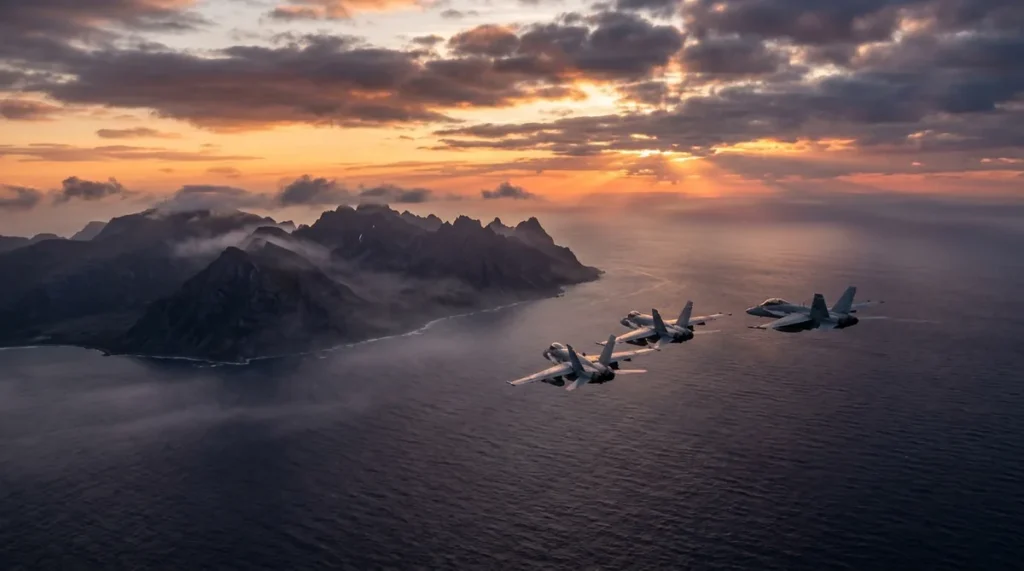
South Korea scrambled fighter jets on Tuesday morning, November 24, 2026, after several Russian warplanes entered its air defense identification zone over the East Sea near Ulleung Island, briefly triggering an evacuation alert for island residents.
The alert was lifted within minutes, but the confusion over whether the aircraft were Russian or North Korean showed how quickly a false alarm can spread.
Key Takeaways
- Several Russian warplanes entered South Korea’s air defense identification zone (KADIZ) early on November 24, 2026.
- South Korea scrambled fighter jets in response.
- Local authorities briefly told Ulleung Island residents to take shelter, mistakenly identifying the aircraft as North Korean.
- The alert was lifted about five minutes later.
- The military said there was no violation of South Korean airspace.
What happened: South Korea Russian warplanes air defense zone
At 7:52 a.m. local time on Tuesday, an emergency alert was issued in North Gyeongsang Province after aircraft approached Ulleung Island in the East Sea. The Ministry of the Interior and Safety initially reported that a Russian aircraft had breached South Korean airspace and told residents to move to underground facilities or take shelter inside buildings.
The government later revised its assessment, saying the aircraft was possibly North Korean. But the South Korean military then clarified that the aircraft were Russian military planes, not North Korean drones. Several Russian military aircraft had entered the KADIZ, approached Ulleung Island and flown away toward the East Sea as South Korea’s military responded.
Why it matters
The incident shows how easily a misidentification can cause panic. Residents of Ulleung Island were told to shelter underground, only for the alert to be cancelled five minutes later. The military said the Russian planes entered the air defense zone but did not violate South Korean airspace, and they exited the zone without further incident.
Air defense identification zones are not the same as sovereign airspace. Foreign military aircraft often enter them, but the combination of a shelter alert and conflicting reports about the aircraft’s origin made this incident unusually tense.
What happens next
The military and other authorities are investigating the exact nationality of the aircraft and how they entered the zone. The incident is likely to be raised in diplomatic channels.
It comes at a time of heightened tensions in the region.
The South Korea Russian warplanes air defense zone incident began with an alert at 7:52 a.m. local time on November 24, 2026, and the alert was lifted at about 7:57 a.m., about five minutes later. South Korea scrambled fighter jets in response, and the military said there was no violation of South Korean airspace.
The South Korea Russian warplanes air defense zone case also underlines the confusion that followed, because local authorities first reported a Russian aircraft and then revised the assessment to say it was possibly North Korean. The military and other authorities are still investigating the exact nationality of the aircraft and how the alert was issued. Until that review is complete, the South Korea Russian warplanes air defense zone alert remains a reminder of how quickly a misidentification can cause panic.
Key facts
- The alert was issued at 7:52 a.m. local time on November 24, 2026, and lifted at about 7:57 a.m.
- The aircraft entered the Korea Air Defense Identification Zone (KADIZ) over the East Sea.
- South Korea’s Air Force scrambled fighter jets in response.
- The military said there was no airspace violation.
- Local authorities initially misidentified the aircraft as suspected North Korean planes.
FAQ
What happened near Ulleung Island?
Several Russian warplanes entered South Korea’s air defense identification zone near Ulleung Island, prompting fighter jets to scramble and a brief shelter alert for residents.
Did the aircraft violate South Korean airspace?
No. The military said the Russian planes entered the air defense zone but did not violate South Korean airspace.
Why was there confusion about the aircraft?
Local authorities first reported a Russian aircraft, then revised the assessment to say it was possibly North Korean. The military later confirmed the planes were Russian.
Sources
- Reuters: South Korea briefly issues evacuation warning after Russia aircraft enters airspace — https://www.reuters.com/world/asia-pacific/south-korea-briefly-issues-evacuation-warning-after-russia-aircraft-enters-2026-11-23/
- Yonhap News Agency: Russian warplanes enter air defense zone, South Korean military says — https://m-en.yna.co.kr/view/AEN20261124002200315?section=national/defense
Internal links
- Trump halts Iowa explosives detonation: https://clipnest.blog/2026/11/trump-halts-iowa-explosives-detonation.html
- CrowdStrike acquires Zscaler in $44 billion deal: https://clipnest.blog/2026/11/crowdstrike-zscaler-44-billion-deal.html
Pingback: Trump Iowa Explosives Detonation Halted Pending Court Ruling - Top News Today